
This site is being archived soon. Visit wesnet.org.au for more information.

About AWAVA Secretariat

This author has not yet filled in any details.
So far AWAVA Secretariat has created 504 blog entries.

Submission on the adequacy of existing offences to capture cyberbullying

AWAVA has made a submission in response to the inquiry on the adequacy of existing offences in the Commonwealth Criminal Code and of state and territory criminal laws to capture cyberbullying.

In the submission we brought the Committee’s attention to the four priority areas for consideration:

  • the need to understand the sexual and gender aspects of cyberbullying, and technology-facilitated abuse generally;
  • the need to address the experiences of diverse groups in relation to these issues;
  • positive approaches to preventing violence and bullying;
  • women and girls active as human rights defenders, and facing backlash and abuse online as a result.
Download our submission here  

2017 Weekly Round Up Archive

Read AWAVA’s Weekly Round-Ups to stay up to date on news from the preventing and responding to violence against women sector.


Love wins! 8 December 2017
Cross-border DVOs, sexual harassment in Aus media, & opportunities to get involved 1 December 2017
16 Days of Activism, Inap Nau partnership in PNG, the heavy toll of online abuse against women, & more 24 November 2017
Marriage equality, preventing systems abuse, 16 Days theme, and more 16 November 2017
Personal Safety Survey, the costs of leaving violence, and ways to get involved 9 November 2017
Tech safety, perpetrator interventions, events, and surveys. 3 November 2017
Gender responsive housing policy and more! 27 October 2017
New National Women’s Alliance, reporting image-based abuse, and more! 20 October 2017
International Day of the Girl and more! 13 October 2017
 Media awards, violence prevention in the Pacific, and more! 29 September 2017
NSW Tenancy Laws, smart homes, restorative justice and more! 22 September 2017
 CSW62 survey and more 15 September 2017
Launch of financial freedom app and more! 8 September 2017
Equal Pay Day and more! 1 September 2017
Vale Fiona Richardson MP 25 August 2017
Postal survey on marriage equality and more 18 August 2017
The unique role of women’s services, 1800RESPECT trauma counselling and more 10 August 2017
AHRC report, dowry-related abuse and more 4 August 2017
Universities Australia (UA) announces national round-the-clock 1800 helpline, run by Rape and Domestic Violence Services Australia (RDVSA), for survivors of sexual assault on university campuses 27 July 2017
Amendments to the Family Law Act to ban alleged perpetrators from cross-examining victims/survivors in domestic violence cases  20 July 2017
 True Relationships and Reproductive Health and Multicultural Centre for Women’s Health two-day National Multicultural Women’s Reproductive and Sexual Health Conference and more 13 July 2017
 Fair Work Commission’s decision on domestic violence leave and more 6 July 2017
 WESNET Annual TechSafety Summit and more! 29 June 2017
AWAVA has joined Women’s Legal Service NSW and 86 other organisations to AWAVA has joined Women’s Legal Service NSW and 86 other organisations to urge the NSW Government to expand the types of evidence that women will be able to rely end a tenancy 22 June 2017
AWAVA joins the call for a Royal Commission into violence and abuse against people with a disability 15 June 2017
Our Watch releases a major new resource, Putting the prevention of violence against women into practice: How to change the story 8 June 2017
The National Foundation for Australian Women releases its 2017 Gender Lens report 24 May 2017
Banning direct cross-examination of victims of violence in family law proceedings 17 May 2017
AWAVA’s Response to Federal Budget 2017 11 May 2017
The Victorian Government announces $1.9 billion in funding to address family violence 3 May 2017
The Australian Government reverses its decision to cut 30% of Commonwealth funding from Community Legal Centres 28 April 2017
New data from the Australian Institute of Health and Welfare (AIHW) on number of women and girls admitted to hospital as a result of assault in 2013-14 21 April 2017

International Anti-Street Harassment week

4 April 2017
1800 Respect contract put out to tender by Medibank Health Services 28 March 2017
Opposition from community organisations to the Omnibus Bill 21 March 2017
Celebrating International Women’s Day 8 March 2017
Bystander intervention to prevent and respond to violence against women 1 March 2017
Access to safe abortion 21 February 2017
Domestic violence and homelessness 14 February 2017
Violence in LGBTIQ communities 8 February 2017
Muslim women fight back against Donald Trump’s executive order restricting people from seven Muslim-majority countries from entering the US 2 February 2017
Women around the world march in solidarity 26 January 2017
AWAVA stands in solidarity with to end victim blaming and eliminate violence against women 19 January 2017

[/fusion_builder_column][/fusion_builder_row][/fusion_builder_container]

2018-2019 Joint AWAVA/Harmony Alliance Pre-Budget Submission

AWAVA has partnered with the Harmony Alliance to make a 2018-2019 Pre-budget submission focusing on the access to services for women from culturally and linguistically diverse backgrounds.


AWAVA and the Harmony Alliance have put 10 recommendations to the Government to ensure that migration rules and eligibility requirements for support services do now disempower victims/survivors of violence or discourage them from leaving violent relationships as committed in the Key Action 3.8. of the Third Action Plan of the National Plan to Reduce Violence against Women and their Children.


Download our submission here  

2018-2019 Pre-Budget Submission

AWAVA has made a 2018-2019 Pre-Budget submission focusing on areas such as the adequate funding and resourcing of the National Plan to Reduce Violence Against Women and Their Children, housing and homelessness services for women and children leaving violence, other services and payments for women facing violence, economic empowerment, access to justice and technological safety for women. 
Download our submission here   

Family violence and migration status: short version

  • Women from culturally and linguistically diverse backgrounds report similar forms of domestic and family violence to other women. However, the impact of violence is exacerbated by the stressors of the migration experience generally, and the constraints of visa status, which may increase women’s dependency on perpetrators for economic security and residency rights.


  • Visa dependency can be created by perpetrators who, by misinforming women about their migration status and rights, continue inflicting violence and exercising control over women.


  • Perpetrators are not held accountable for inflicted violence. While the Department of Immigration and Border Protection requires sponsors to provide police checks, the Department may only ban perpetrators of serious violence from sponsoring more women to come to Australia on partner visas in the future.


  • Under current migration law, women who are holders of a partner visas are able to access permanent residency in situations when their relationships have broken down due to family violence. Family violence provisions are only available to a limited number of partner visas and under the distinguished talent visa. Women on a prospective marriage visas are only eligible to use family violence provisions if they marry their sponsor before the relationship breaks down due to family violence. Other visas that only give women temporary status do not offer any protections or other visa pathways in instances of family violence.


  • The definition of family violence as adopted by the Department of Immigration and Border Protection does not encompass family violence perpetrated by r family members other than a partner, nor does it consider violations of sexual and reproductive rights (otherwise known as reproductive coercion), technology-facilitated abuse or cultural and spiritual abuse to be relevant forms of family violence.


  • For eligible women to access family violence provisions they first need to prove the genuineness of their relationship, and then provide evidence that violence has been inflicted. Presenting oneself socially as a couple or proving joint financial management are some of the criteria used by the Department to establish that there is a genuine relationship. There is a lack of understanding by decision makers that social isolation and financial deprivation and control can be manifestations of family violence.


  • Visa dependency and the lack of protection for women on temporary visas who are experiencing family violence create a greater demand for already stretched family violence services. Women on temporary visas normally need more support in refuges and shelters and they stay there for longer periods of time due to lack of financial capacity and suitable exit points. Many types of temporary visas make women ineligible to access Centrelink payments or social housing.


  • AWAVA is calling for equitable access to family violence provisions or complementary protections, pathways to permanent residency where applicable for women who have had violence inflicted on them, full access to services including legal & financial support, counselling and housing, enhanced training on trauma, cultural competency and family violence for relevant decision makers including independent experts and interpreters and the greater commitment by government to ending violence against women.

For more detailed analysis of the intersection between family violence and migration status click here.

Day 16 Human Rights Day

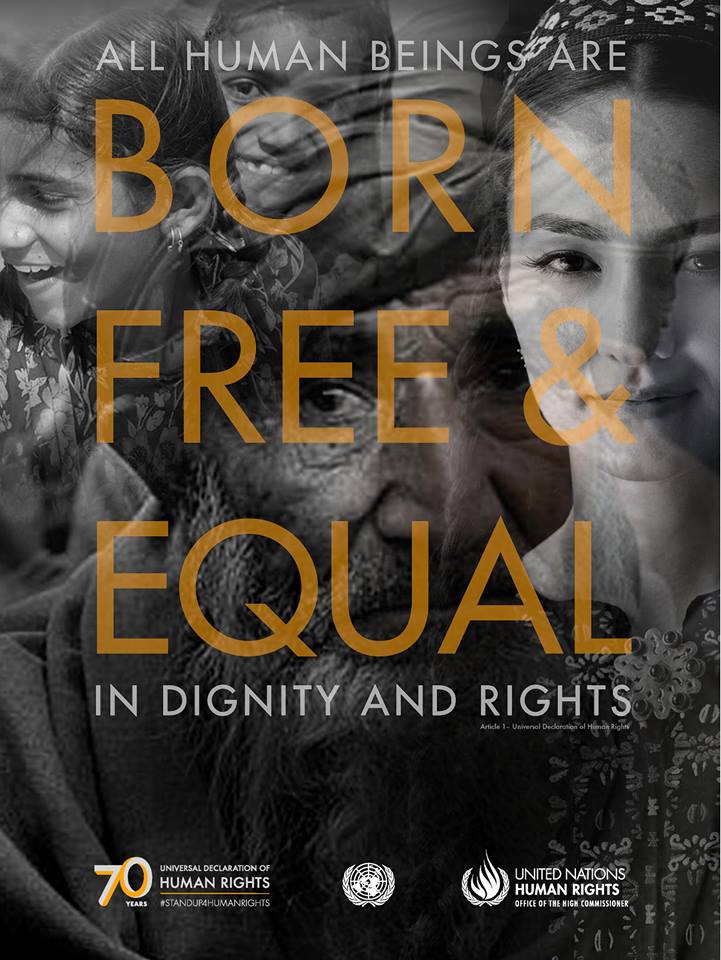
Today we are celebrating 70 years since the creation of the Universal Declaration of Human Rights.  

AWAVA recognises that violence against women and girls is one of the most serious and widespread violations of fundamental human rights. It manifests itself through violations of the rights to: life, equality and non-discrimination, rights not to be subjected to torture and treated in an inhuman and degrading way, rights to liberty and security, the highest standard attainable of physical and mental health, to respect, to physical, sexual and psychological integrity, and to just and favourable conditions of work. 


We work to combat all forms of violence against women to ensure that all women and children are able to live free from all forms of violence and abuse. 


In our work to end violence against women, we have strong links with international bodies and mechanisms to advance gender equality. This year the National Women’s Alliances have produced a fact sheet mapping international engagement and outlining each Alliance’s domestic advocacy priorities against international frameworks and commitments on gender equality and women’s rights. 


The AWAVA fact sheet describes our engagement with the Convention on Elimination of all forms of Discrimination against Women (CEDAW), Sustainable Development Goals, Commission for the Status of Women as well as other international mechanisms.


You can download it here.  

Day 15 Greater commitment to ending violence against women

Tomorrow will mark the end of the #16Days of Activism to end violence against women.


Over these 16 days AWAVA has been highlighting challenges of diverse groups of women, different manifestations and consequences of violence against women, as well as steps to be taken to end violence against women.


We thank you all for joining the conversation and spreading the messages. We urge you to continue taking the steps to end violence against women with us.


Get the brochure. Together we will make a difference.

  • Steps you can take to help end violence against women – Glossy.

Day 14 Technology-facilitated abuse & violence against women

Over the last few decades, technology such as the internet, social media, mobile phones, computers and surveillance devices have increasingly been used against women by perpetrators as a tactic of control and abuse within the wider context of violence against women.


Manifestations of technology-facilitated abuse range from recording of intimate images where a victim/survivor does not have a safe option not to consent, to stalking, installing hidden applications to track woman’s location

[1]or to obtain access to her email or messages, (cyber)bullying and harassment, and the use of communications technologies to enable a sexual assault and/or to coerce a victim into an unwanted sexual act. [2]


Technology-facilitated abuse has also become a tool of perpetrators of domestic and family violence to threaten, harass and/or control both current and former partners.[3]  In terms of sexual violence in both intimate partner and non-intimate partner relationships, technology is another weapon with which assault is perpetrated. Manifestations of technology-facilitated sexual violence include non-consensual sharing of intimate images, online sexual harassment, technology-facilitated sexual assault and coercion, sexual exploitation, broadcasting sexual assaults online etc.   


Non-consensual sharing of intimate images has damaging consequences that go beyond its potential impact on reputations and career prospects. Research has found that technology-facilitated abuse, including the non-consensual sharing of intimate images, or the threat of sharing such images, can traumatise and isolate victims and constitutes a major barrier to the full enjoyment of social life and autonomy.[4] Online interactions now constitute a major dimension of social life for many people, and the unauthorised sharing of intimate images can traumatise and isolate victims, which is often the intention of those who share the images. Furthermore, the non-consensual sharing of intimate images, or the threat to share such images, is increasingly used as a tactic of control in abusive relationships and in the perpetration of sexual assault. More generally it also manifests and reaffirms the means of maintaining male privilege and power.  


While both men and women may become victims of technology-facilitated abuse, it is important to recognise the gendered nature of the technology-facilitated abuse. Firstly, as research has shown the majority of victims are women and the majority of perpetrators are men.[5]   Secondly, the impacts of this behaviour is gendered as it is rooted in outdated stereotypes about gender roles, sexuality and sexual norms for women. And lastly, the underlining cause of violence inflicted through technology lies in the “social and structural context of gender hierarchization”[6], in other words, power relations between men and women, the dominant position of men over women, and the desire for control and coercion. The normalisation of male violence and restrictive expectations about women and girls are some of the key drivers of violence and bullying generally. 


We are also seeing an increased number of social media pages and groups promoting violence against women, sexism, and harmful gender stereotypes. Typically, these are created in traditionally masculine institutions such as the military or sporting clubs. It takes a lot of community pressure to remove these pages.[7]


Comprehensive research on the prevalence of all forms of technology-facilitated abuse is absent in Australia. Most commonly, technology-facilitated abuse is viewed as a type of violence against women. The most recent research focusing on the scale of image-based abuse (as one form of technology facilitated abuse) only has been done by researchers from RMIT and La Trobe University. This research found that one in five people in Australia has experienced image-based abuse.[8]  While both women and men are equally affected, men are more likely to be a perpetrator and known to the victim. The study has also found that 56 per cent of people with a disability and 50 per cent of Indigenous Australians had been victims of image-based abuse. People who identified as LGBTIQ were more likely to be victims (36 per cent) than heterosexual people (21 per cent). 


In 2017 the Australian Human Rights Commission produced a report on sexual assault and sexual harassment at universities in Australia. It has found that “more than 1 in 5 students experienced technology-based sexual harassment in 2016”.  More detailed findings highlighted that:  


  • 22% of students had experienced technology-based sexual harassment on at least one occasion in 2016;
  • 5% of students experienced technology-based sexual harassment in 2016 in a university setting;  
  • Women (3.2%) were more than twice as likely as men (1.4%) to have been sexually harassed in a university setting in the form of repeated or inappropriate advances on email, social networking websites or internet chat rooms; and
  • Trans and gender diverse students were more likely than women or men to report sexual harassment at university in 2016.[9]


In the area of domestic and family violence, technology-facilitated abuse is widespread. The national survey of technology-facilitated abuse drawing on the experience of family violence practitioners across Australia[10]  stated that almost all survey respondents (98 per cent) indicated that they had clients who had experienced technology-facilitated stalking and abuse. Another survey of survivors who had received unwanted contact from a partner or ex-partner via the phone or internet found that 80 per had been abused via text messages, while Facebook was the next most commonly used technology.[11]


In order to prevent and respond to technology-facilitated abuse there is a need to: 


  • Broaden the overall definition of violence against women to include technology-facilitated abuse 
  • Increase focus on the primary prevention programs consisting of (but not limited to) educational programs about dominant constructions of gender, masculinity and violence against women, as well as promoting and mainstreaming gender equality on multiple levels including through policy.
  • Reform criminal and civil laws to ensurea consistent and uniform legislation adequately responding to the nature of crime and impact it has, especially in aggravated cases.  
  • Ensure adequate consultation process regarding legislation changes
  • Provide training for magistrates, lawyers and police on violence against women and technology 
  • Provide training and resources for frontline workers and service providers 
  • Ensure adequate and sustainable funding to service providers
  • Provide sufficient support and information for a diversity of victims/survivors 
  • Take all necessary steps for improved community awareness and attitude changeincluding encouraging ‘bystander’ and ‘witness’ actions and challenging the culture of victim-blaming.[12]  


Resources: 


References cited:

 [1] See http://www.smartsafe.org.au/disturbing-new-trend-domestic-violence-offenders-use-car-tracking  

[2] Anastasia Powell & Nicola Henry (2016): Policing technology-facilitated sexual violence against adult victims: police and service sector perspectives, Policing and Society, DOI:10.1080/10439463.2016.1154964 

[3] Henry, N., Powell A. (2015) Beyond the ‘sext’: Technology facilitated sexual violence and harassment against adult women. Australian & New Zealand Journal of Criminology. Vol. 48(1) 104–118 

[4] See: Anastasia Powell & Nicola Henry (2016): Policing technology-facilitated sexual violence against adult victims: police and service sector perspectives, Policing and Society, DOI:10.1080/10439463.2016.1154964; Henry, N., Powell A. (2015) Beyond the ‘sext’: Technology facilitated sexual violence and harassment against adult women. Australian & New Zealand Journal of Criminology. Vol. 48(1) 104–118; Henry N., Powell A. (2016) Sexual Violence in the Digital Age: The Scope and Limits of Criminal Law Social & Legal Studies, Vol. 25(4) 397–418; Henry N., Powell A. (2015) Embodied Harms: Gender, Shame, and Technology-Facilitated Sexual Violence. Violence Against Women, Vol. 21(6) 758–779; McGlynn, C., Rackley, E. (2017) Image-Based Sexual Abuse. Oxford Journal of Legal Studies, Vol. 37, No. 3, pp. 534–561; Henry, N., Powell A., Flynn A. (2017) Not Just ‘Revenge Pornography’: Australians’ Experiences of Image-Based Abuse. A SUMMARY REPORT. RMIT University. Available at https://www.rmit.edu.au/news/all-news/2017/may/not-just-_revenge-porn–image-based-abuse-hits-1-in-5-australian.   

[5] Henry N., Powell A. (2016) Sexual Violence in the Digital Age: The Scope and Limits of Criminal Law Social & Legal Studies, Vol. 25(4) 397–418 

[6] Ibid.  

[7] For recent examples see: http://www.huffingtonpost.com.au/2017/10/23/facebook-shuts-down-vile-rape-and-violence-group-linked-to-adf-troops_a_23253443/ ; http://www.sbs.com.au/news/article/2017/10/24/facebook-closes-rape-meme-page-adf-troops-link In a recent development, Facebook and the Australian Office of the eSafety Commissioner have announced an initiative to use Facebook’s image recognition tool to let users report non-consensual intimate images, have the image removed and then ensure it is not uploaded again or shared from other sources. See http://www.afr.com/technology/facebook-and-esafety-commissioner-join-forces-to-stop-revenge-porn-in-australia-20171031-gzcc0y

[8] Henry, N., Powell A., Flynn A. (2017) Not Just ‘Revenge Pornography’: Australians’ Experiences of Image-Based Abuse. A SUMMARY REPORT. RMIT University. Available at https://www.rmit.edu.au/news/all-news/2017/may/not-just-_revenge-porn–image-based-abuse-hits-1-in-5-australian

[9] Australian Human Rights Commission (2017) Change the Course. National Report on Sexual Assault and Sexual Harassment at Australian Universities. Available at https://www.humanrights.gov.au/sites/default/files/document/publication/AHRC_2017_ChangeTheCourse_UniversityReport.pdf

[10] Woodlock, Delanie (2015) ReCharge: Women’s Technology Safety, Legal Resources, Research and Training, Women’s Legal Service NSW, Domestic Violence Resource Centre Victoria and WESNET, Collingwood. 

[11] Woodlock, Delanie (2013) Technology-facilitated Stalking: Findings and Recommendations from the SmartSafe Project, Domestic Violence Resource Centre Victoria, Collingwood http://www.smartsafe.org.au/sites/default/files/SmartSafe-Findings-Booklet.pdf  

[12] Henry, N., Powell A., Flynn A. (2017) Not Just ‘Revenge Pornography’: Australians’ Experiences of Image-Based Abuse. A SUMMARY REPORT. RMIT University. Available at https://www.rmit.edu.au/news/all-news/2017/may/not-just-_revenge-porn–image-based-abuse-hits-1-in-5-australian 


Go to Top