This site is being archived soon. Visit wesnet.org.au for more information.

About AWAVA Secretariat

This author has not yet filled in any details.
So far AWAVA Secretariat has created 504 blog entries.

Position Paper on the Development of the Fourth Action Plan

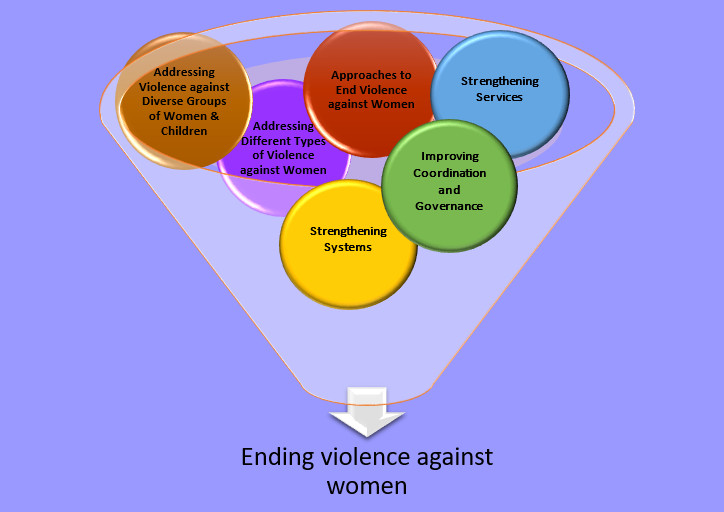
AWAVA offers a comprehensive structure that policy-makers might find useful in conceptualising the priority areas for the Fourth Action Plan of the National Plan to Reduce Violence Against Women and their Children, and working towards a second National Plan. We offer a framework for addressing violence against women and their children holistically by taking intersectional approaches to end violence against women, addressing violence against diverse groups of women and their children, addressing different types of violence against women, strengthening systems and services, and improving coordination and governance. For all the efforts to be sustainable and successful, long-term funding is required.
 

Download the full Position Paper here   

Submission on the situation of women human rights defenders

AWAVA has made a submission in response to the consultation held by the UN Special Rapporteur on the situation of human rights defenders with a focus on women human rights defenders.

We focused on the emerging trends of technology-facilitated abuse of women, as well as the backlash against mainstreaming gender equality.

Download our submission here  

Submission on the development of the Fourth Action Plan

This submission draws on the survey conducted by AWAVA in May-June 2018, as well as AWAVA’s policy positions established in consultation with our members and networks including peak bodies and other diverse organisations from every State and Territory in Australia working in areas such as domestic and family violence, sexual assault, legal assistance, and education.


The Fourth Action Plan is a milestone in the efforts to respond to violence against women in Australia. Being the last four-year plan of the 12-year timeframe, it represents a crucial opportunity for honest evaluation and thoughtful planning towards ongoing, consistent and well-resourced efforts to reduce and ultimately end violence against women.

AWAVA offers a comprehensive structure that policy-makers might find useful in conceptualising the priority areas for the Fourth Action Plan, and working towards a second National Plan. We offer a framework for addressing violence against women and their children holistically by taking intersectional approaches to end violence against women, addressing violence against diverse groups of women and their children, addressing different types of violence against women, strengthening systems and services, and improving coordination and governance. For all the efforts to be sustainable and successful, long-term funding is required.
 

Download the full Position Paper here 


Download the Executive Summary here  

AWAVA Fourth Action Plan Survey Report

The National Plan to Reduce Violence Against Women and Their Children 2010-2022 (the National Plan) is a major policy framework that has the potential to help achieve gender equality and end violence against women. The National Plan acts as the primary Australian policy on reducing sexual assault and domestic and family violence.


Support for the National Plan has been an important part of AWAVA’s work since the inception of the Plan. We have provided advice on the development of the three Action Plans so far, and have provided feedback on their implementation.


This survey is a part of AWAVA’s work to contribute to evaluations of the Third Action Plan (3AP) and consult on the development of the Fourth Action Plan (4AP). The survey aims to identify gaps, issues and positive steps that can inform the creation of the Fourth Action Plan.


The survey was structured to collect separate data from individuals (people speaking on their own behalf only, and not on behalf of any organisation), and representatives of service providers and peak bodies. Part 1 of this report combines responses from service providers and peak bodies. Part 2 summarises responses received from individuals. Part 3 combines diversity data.


The survey ran from May to June 2018. In total, 243 people responded to the survey. Among them there were 79 service providers (48 full and 31 partial responses), 7 peak bodies (4 full and 3 partial responses) and 157 individual responses. Partial responses were used in the analysis to the extent possible. Where appropriate we indicate the total number of responses received to a given question. We would like to thank everyone who completed the survey, and all the individuals and organisations who circulated it within their networks.


Download the report here

United Nations reviews Australia’s record on women’s rights

On 2-3 July 2018, the United Nations Committee on the Elimination of Discrimination Against Women reviewed Australia’s record on women’s rights.


As well as a report by the Australian Government, the CEDAW Committee was informed by civil society organisations, including AWAVA through our Shadow Report on violence against women.


Other Australian NGOs and groups also submitted shadow reports, including:
• an Australian NGO coalition, coordinated by Kingsford Legal Centre
• National Aboriginal and Torres Strait Islander Women’s Alliance (NATSIWA)
• Women with Disability Australia
• Equality Rights Alliance
• Project Respect
• Prosecute; don’t perpetrate, and
• Queer Sisterhood Project
(You can access the full list of NGO submissions here.)


In Geneva, the Committee met with Australian civil society organisations and human rights institutions – the meeting is summarised here.


Civil society representatives Hannah McGlade, Maria Nawaz, Lavanya Kala, Lee Carnie and Ruth Saovana Spriggs spoke about key concerns:

• child removal, incarceration and violence affecting Aboriginal and Torres Strait Islander women,

• human rights protections, structural disadvantage of women and reproductive rights,

• violence against women generally,

• the intersectional and diverse needs of women and girls; and

• Australia’s extra-territorial obligations in Papua New Guinea.


On the following day, the Committee raised several issues with Australian Government representatives (watch the dialogue here and here), focusing on:
• mechanisms to implement women’s human rights,
• health including forced sterilisation and access to abortion,
• violence against women with disability,
• domestic and family violence,
• family law,
• parental leave and the gender super gap,
• income support, and
• homelessness.


The UN experts also backed up AWAVA’s concerns about specialist women’s services being undermined, noting that “gender-neutral” services are less likely to be approached by those in need, and less likely to provide the required sense of safety and security. Susan Hutchinson has written about the dialogue as it focused on violence against women – ‘UN grills Australia on multiple failures to protect women against violence’.


You can read a summary of the review as a whole by Susan Hutchinson and Hannah Gissane here and another wrap-up here.


CEDAW’s concluding observations on Australia will be published online on 23 July 2018.

2018 CEDAW Shadow Report – Violence Against Women

AWAVA with contributions from National Family Violence Prevention Legal Services Forum, Harmony Alliance and Refugee Council of Australia has made a submission to the 70th session of the United Nations Conventions on the Elimination of all Forms of Discrimination Against Women (CEDAW).
 

The shadow report looks at the issues of violence against women.
 
Download our submission here  

Go to Top