This site is being archived soon. Visit wesnet.org.au for more information.

About AWAVA Secretariat

This author has not yet filled in any details.
So far AWAVA Secretariat has created 504 blog entries.

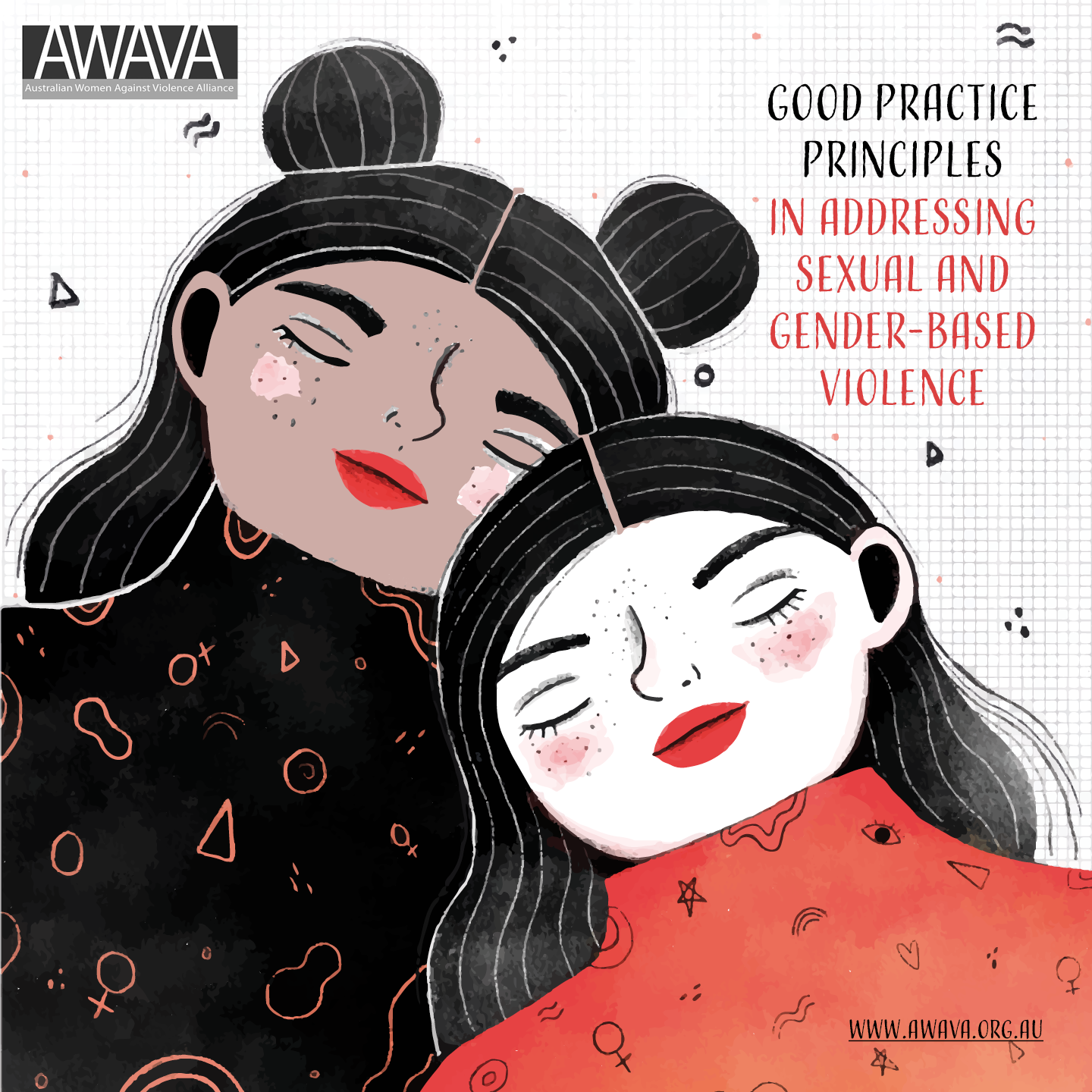
Good Practice Principles in Addressing Sexual and Gender-Based Violence

Given the high prevalence of sexual and gender-based violence and its complexity, it is critical that services working with victims/survivors of violence are appropriately equipped to support them.


The purpose of this brochure is to synthesise the unique and effective practice model derived from specialist women’s services to inform policy direction and practices of generalist services who also work with victims/survivors of sexual and gender-based violence. We use the language of ‘specialist women’s services’ to draw on their practice model and to outline required expertise however we also recognise the role community-led and –controlled organisations play in prevention and responses. Applying these principles will result in safe, just and effective outcomes for victims/survivors regardless of their backgrounds.


There are eight Good Practice Principles outlined in this document:

  1. Principle 1: A human rights-based approach
  2. Principle 2: An intersectional and equitable feminist approach
  3. Principle 3: A victim/survivor centred practice and empowerment approach
  4. Principle 4: Safety and risk focus
  5. Principle 5: Trauma-informed practice
  6. Principle 6: Perpetrator accountability
  7. Principle 7: Confidentiality, organisational accountability and service responsiveness
  8. Principle 8: Interagency collaboration

Download the full brochure:  


To promote the brochure, download and use this poster or this social media tile.
 

You can watch our webinar,  The unique role of specialist women’s services in ending sexual and gender-based violence, in which the brochure was launched here. A transcript of the webinar is available here.  
 

Submission to the Social Security (Administration) Amendment (Continuation of Cashless Welfare) Bill 2020

AWAVA strongly opposes the proposed amendments to the Social Security (Administration) Act 1999, in particular to establish the Cashless Debit Card (CDC) as an ongoing program.


We recommend that the Australian Government:
1. Abandon the cashless debit cards legislation;
2. Establish a voluntary opt-in framework for welfare management; and
3. Apply an intersectional gender lens to social security policy.


Download our submission here  

2020-2021 Federal Budget Analysis

AWAVA has conducted a budget analysis in relation to budget measures aimed at prevention and responses to all forms of violence against women and their children.
 

The bushfires and Covid-19 had brought on a number of social challenges for the people living in Australia. The stresses and the home confinement due to mandatory lockdown and economic insecurity have led to a spike in violence against women along with demand for frontline services serving victims/survivors of violence. At the start of the year, the Government provided the initial $150 million to meet the rising demands on the frontline services. As part of the 2020 Budget, the Government has announced the continuation of the Social and Community Sector Supplementation payments from July 2021. It has also announced a continued commitment to fund the 1800RESPECT Helpline. However, the Government has not added more funding in the forward estimates to address the ‘shadow pandemic’ of family and domestic violence.
 
Read the full analysis:  


Calls for structural change to budget are building as women are left behind

Following last Tuesday’s budget announcement, there is a growing consensus that the federal budget needs fundamental change. Seventeen organisations have come together to call for a new approach to budgeting which will bring women’s needs into sharper focus.


“The Minister for Women, Marise Payne, has made it clear that she understands that women will play a vital role in this recovery and the measures outlined in the Women’s Economic Security Statement are a strong first step in that direction,” said Helen Dalley-Fisher, Senior Manager of the Equality Rights Alliance. “It’s therefore concerning that the rest of the budget failed to address the key structural issues facing women. It’s become clear that the budget process itself is one of the barriers we have to address.”


The job of confronting the bias in the budget has been made a little easier by a recognition of the need for more robust data about women’s lives. “It was pleasing to see that there will be a revision and enhancement of the ABS’ Gender Indicators report,‘ said Trish Bergin of the 50/50 by 2030 Foundation. ‘Gender relevant data is essential as a building block towards understanding the gender impact of both current and prospective policy changes”.


However, despite widespread calls for investment in social housing from economists, housing specialists and women’s groups, the budget didn’t address Australia’s dire lack of affordable housing. “We have known for years that Australia is experiencing a housing affordability crisis, with older women the fastest growing group experiencing homelessness,” said Emma Davidson of the Women’s Electoral Lobby. “Building more social housing would help with the rising tide of homelessness, while also creating jobs.”


Another area which needed but failed to get urgent attention in this budget was childcare. Chief Executive Women President, Sue Morphet, said “Increasing female full-time workforce participation is one of Australia’s biggest economic opportunities; and making early childhood education and care more affordable is one of the most effective policy levers to do that. This is not welfare; it is investment in the infrastructure women need to participate more fully in the workforce and maximise their productivity and opportunities.”


“With soaring rates of all forms of violence against women and their children, it is vital that we fund long-term solutions and building a future free from violence for people in Australia” said Tina Dixson, Acting Program Manager of the Australian Women Against Violence Alliance. “The COVID-19 pandemic has not only increased the prevalence of violence but created additional barriers for women to seek safety. Without gender responsive budgeting and commitment to ending violence against women we risk losing lives”.


The Aid budget saw a slight increase for gender equality initiatives but at just 32 per cent of overseas development assistance it falls far short of what’s needed. “Women worldwide are experiencing the worst impacts of the economic and health crises brought on by COVID-19, yet the Government continues to make cuts to the Aid budget in regions where women face persistent gender inequality, alongside the growing impacts of the pandemic,” said Michelle Higelin, Executive Director of global women’s rights organisation ActionAid Australia. “At a time when gender equality is deteriorating worldwide at an alarming pace, Australia’s leadership is vital to address the disproportionate impact this pandemic is having on women and support women leading local responses.”


“It’s time for us to join the majority of nations in the OECD and work towards a budget that is truly gender responsive,” said Helen Dalley-Fisher. “We need a budget and policy process that makes it possible for policy makers to see and address the needs of women.”


For media comment or speakers for interview, please contact:

Helen Dalley-Fisher, Equality Rights Alliance – Senior Manager on 0413 065 822 or [email protected].

Emma Davidson – Women’s Electoral Lobby on 0459 901 306
Tina Dixson – AWAVA on 0428 541 396 or [email protected]


Download a copy of this media release here:  

Safe Access Zones: Key Violence Prevention Mechanism

Violence prevention advocates, sexual and reproductive health advocates and legal experts have today released a paper that underlines the importance of safe access zones as a key violence prevention measure in Australia.

Safe access zones are allocated ‘bubbles’ of safety around facilities that provide abortion care that prohibit harassment and intimidation of patients and staff. Safe access zones are in place in all States and Territories apart from South Australia and Western Australia.


The paper highlights that picketers outside of abortion care facilities can erode community trust and feelings of safety for staff working at these facilities and patients accessing services. With a majority of patients accessing these facilities being women, ensuring patients feel safe to access abortion services is key to primary prevention of violence against women.


The University of Queensland’s Pro Bono Centre, the Australian Women Against Violence Alliance and Marie Stopes Australia have developed the paper to inform legislative debate in South Australia and Western Australia, with both States in the process of, or committed to progressing safe access zone legislation.


The paper highlights key issues in debates surrounding safe access zones, specifically, implied freedom of political communication and whether safe access zones breach this constitutional right. This was a matter considered by the High Court recently with all seven judges agreeing that safe access zones do not breach the constitutional right of implied freedom of political communication.


The paper also considers and provides recommendations on key aspects of safe access zone legislation in South Australia and Western Australia including size, definitions of prohibited behaviour, premises that are covered by the zones and exemptions.


In the next two years Australia is providing its human rights review as a part of the Universal Periodic Review as well as its report on women’s rights under the Convention on the Elimination of All Forms of Discrimination Against Women (CEDAW). This paper provides a key argument for the harmonization of Australia’s safe access zone laws to prevent violence against women and pregnant people accessing vital sexual and reproductive health services.


QUOTES FROM Professor Heather Douglas, Law School, the University of Queensland:

‘Safe access to health care should be available to everyone and safe access to abortion care should be no different to other health care.’

‘Experience shows that legislation providing for safe access zones improves the safety and security for both health workers attending work and people seeking abortion care.’


QUOTES FROM THE AUSTRALIAN WOMEN AGAINST VIOLENCE ALLIANCE (AWAVA), Tina Dixson, Acting Program Manager:

“Access to reproductive healthcare is crucial for women and people who are pregnant in upholding their reproductive rights and bodily autonomy”.

“In situations of violence, access to sexual and reproductive healthcare is about long term recovery and living lives free from violence. For women currently experiencing violence, clinics need to be safe, calm and accessible environments free from judgement and harassment”.


QUOTES FROM MARIE STOPES AUSTRALIA, Jamal Hakim, Managing Director:

“Everyone has the right to access healthcare services safely and with their privacy and dignity protected and respected. Everyone has a right to access their workplace without being intimidated and harassed.”

“Sadly, the picketers outside our clinic in Western Australia believe they can harass and intimidate people without consequences, and this is unacceptable.”

“It really is sad that we need safe access zones. However, the experience of our staff and clients has shown how necessary they are. In places where they have been enacted, they have made a huge, positive impact on the feelings of safety and privacy for staff and clients.”


– Ends –


Marie Stopes Australia is a national not for profit provider of sexual and reproductive health services including permanent and long-acting reversible contraception and abortion care. For more information on our clinic network visit mariestopes.org.au


Media contact:

Jacquie O’Brien, Director Public Affairs and Policy, Marie Stopes Australia, 0428 396 391

Tina Dixson, Acting Program Manager, Australian Women Against Violence Alliance, 0428 541 396


Download a copy of this media release here:


Safe Access Zones in Australia

Australian Women Against Violence Alliance has partnered with Marie Stopes Australia and the University of Queensland (UQ) Pro Bono Centre to produce a paper on Safe Access Zones in Australia.


Safe access zones function in all jurisdictions in Australia with the exception of South Australia and Western Australia. With the move to legislate safe access zones in two remaining states, this report is crucial to our understanding of the efficacy of safe access zones with regard to sexual and reproductive rights and choices.


Read AWAVA’s Summary paper here:


Read the full paper here:


Submission to the House Standing Committee on Social Policy and Legal Affairs in response to the Inquiry into family, domestic and sexual violence

Family, domestic and sexual violence (FDSV) are human rights violations that are gendered in their nature where the majority of the perpetrators are men and the majority of the victims/survivors are women.
 
In this submission, AWAVA is presenting evidence-based recommendations to the National Inquiry and identifying policy directions for the development of the Second National Plan to Reduce Violence against Women and their Children.
 

Download our submission here  

Joint NGO Submission on behalf of the Australian NGO Coalition to Australia’s 3rd Universal Periodic Review

This Joint NGO Submission is endorsed, in whole or in part, by 202 NGOs across Australia, including AWAVA. The submission was coordinated by the Human Rights Law Centre, the Kingsford Legal Centre and the Caxton Legal Centre, working with an Advisory Group comprised of 16 NGOs, which provided expert guidance on the content and focus of the submission.


The sections in the submission were developed by 21 expert and recognised NGOs, working with 36 other diverse NGOs. Particular attention was taken to ensure intersectionality across the sections, reflecting the compounding nature of discrimination and disadvantage in Australia, and the direct participation of Aboriginal and Torres Strait Islander Peoples and their organisations.


Download this report here  

AWAVA Submission to the Select Committee on COVID-19

In this submission we discuss the increase in prevalence and intensity of several types of sexual and gender-based violence inflicted on women and their children during and after the COVID-19 pandemic, as well as providing the analysis of the government response in relation to domestic and family violence.


Download our submission here  

Go to Top