This site is being archived soon. Visit wesnet.org.au for more information.

Data: Fighting or facilitating violence against women?

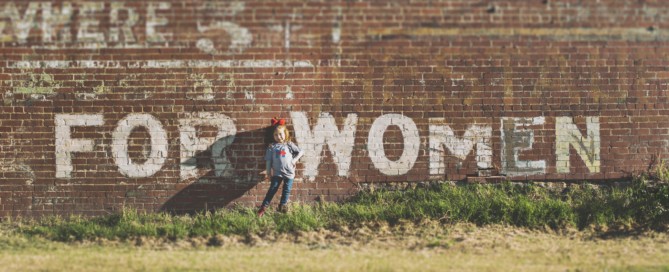
Photo by Franki Chamaki on Unsplash


In early 2018, Google has launched a website titled “Me Too Rising”

[1] that visualises trends of web searches of across space and time at a global scale, noting cities where a markedly high proportion of total searches are for “MeToo”. Me Too is a movement founded in 2006 by African-American activist Tarana Burke to raise awareness of the pervasiveness sexual assault [2], which spread rapidly in 2017 as social media users adopted the hashtag #MeToo to share their experiences of sexual assault. Using a tool like this immediately highlights regions of significant search activity, as clear evidence of the power and potential of technology for facilitating, growing and furthering movements [3].


Over four months from November 2018 to February 2019, a project – funded by the Victorian government – developed by digital mapping company Crowdspot and Monash University’s Space Gender Communication (XYX) Lab, collected data to map experiences of gender inequity and equity in the Darebin and Milton council areas in the Melbourne region. The Gender Equality Map will allow urban planners to better understand “patterns of exclusion and inclusion” [4], providing an indication of the scale and extent of gender inequality based on contributions by people of all genders. This example of crowdsourced mapping is not the first of its kind: the Free to Be project has been a platform for women and girls to indicate places in Melbourne and Sydney where they have felt unsafe – including providing anonymous descriptions about particular incidents [5]. (It is important to consider here that the majority of sexual violence is perpetrated by someone that the victim/survivor knows, as opposed to a stranger [6]. Planning for safer public spaces is not alone enough to end violence against women, and forms part of a solution that ultimately addresses the underlying issues in society that lead to perpetrators’ acts.)


The value of collecting data is that it allows for the aggregation of experiences and incidences, to identify patterns and relationships across space and time. Correlations between certain events and experiences of violence can reveal factors relating to violence: the link between family violence and major sporting events and seasonal holidays is clear and well-known [7], so much that police and services anticipate and prepare for spikes in calls they receive for family violence-related matters [8,9]. The uneven distribution of violence due to the compounded experiences of marginalisation with gender-based violence faced by Aboriginal and Torres Strait Islander women, immigrant and refugee women, women with disabilities, LGBTIQ+ women, and young and elder women, is also highlighted and can be better understood and studied through demographic analysis of data. Data also reveals the sheer scale of violence against women: knowing, thanks to extensive data collection and analysis, that one in three women have experienced violence since the age of fifteen drives home the prevalence and severity of the problem [10], emphasising the urgency with which action must be taken. In theory, through analysing data relating to violence against women, support services can be planned for accordingly, and policies implemented to address the underlying patterns and issues that are identified.


However, there is a grim side to data’s relationship with violence against women. The power of data and technology can also be used by perpetrators to harass, intimidate and abuse. A recent case in Queensland where a police officer breached privacy and shared the details of a victim of domestic violence to an abusive former partner [11] is an example of this risk. The Australian Government’s online My Health Record [12] and myGov portal [13] have come under scrutiny for the possible ease of access perpetrators of violence have to a wide range of personal details and records, all through a single log-in. Moreover, surveillance in the name of national security is becoming increasingly prevalent [14], where people are unaware of what data or footage is being collected, for what purposes, and where it is stored. Personal information may be accessed and used by perpetrators of family violence. While there is sometimes the option to choose not to provide their information to online databases such as My Health Record, having an opt-out system, as compared to an opt-in one, may place victims/survivors who may not have access to and/or proficiency with technology (such as older people) in a position where they are unable to exercise their choice not to participate. A shift towards online databases and increasing dependence on the Internet may in fact place older people at greater risk of online abuse as well [15].


It is therefore all the more crucial that service providers and database managers ensure confidentiality of data and promote the use of security measures such as two-factor authentication [16] in order to maintain the safety of technology users. Moreover, any data collection taking place should involve transparency, and be accompanied by support on technological literacy to reduce the risk of online abuse.


Statistics on violence against women are only as good as the available data. People and groups of people who face barriers in reporting experiences of violence and/or seeking support are underrepresented in data collected by the police and/or service providers, and data available on violence against women is therefore likely to be an underestimation of the actual prevalence of such experiences. Incident-based reporting, employed by police, can fail to pick up on patterns of abuse, misrepresenting the ongoing and serious nature of control and coercion. Even statistical surveys such as those conducted by the Australian Bureau of Statistics have their limitations [17]. The benefits of data mentioned above, such as identifying patterns, can only be fully realised when barriers to reporting are broken down, allowing for a more holistic and comprehensive picture.

It is also important to consider that  data can be misconstrued or reported in a way that fits the agenda of whoever is presenting it; the very same data can be used to reach different (at time opposing) conclusions, depending on subtle phrasing differences [18]. We should be aware of these complexities in the way we read data that we may come across scrolling through social media or reading the news.


Data is neither essentially helpful nor inherently harmful to the goal of ending violence against women: rather, data’s value depends on how it is collected, used, and presented. Data, like many other things, can be used to perpetuate abuse and harmful attitudes that promote violence. At the same time, sound data is vital for understanding the issues and investigating possible responses. Individual and collective efforts to promote safety can be strengthened by understanding more about data, and by developing ethical, critical approaches to its use.


Sumithri Venketasubramanian

AWAVA Admin & Comms Assistant


References


[1] Google Trends, 2018. Me Too Rising. Google. Online. Accessed 30 October 2018. Available at:

https://metoorising.withgoogle.com/


[2] Brockes, E., 2018. Me Too founder Tarana Burke: ‘You have to use your privilege to serve other people’. The Guardian. 15 January. Online. Accessed 30 October 2018. Available at:

https://www.theguardian.com/world/2018/jan/15/me-too-founder-tarana-burke-women-sexual-assault


[3] Tripathi, R., 2018. #MeToo has arrived in India, and it’s changing how technology is used to fight injustice. The Conversation. 27 October. Online. Accessed 30 October 2018. Available at:

https://theconversation.com/metoo-has-arrived-in-india-and-its-changing-how-technology-is-used-to-fight-injustice-105755


[4] Precel, N., 2018. Know somewhere that’s not gender equitable? Crown mapping aims to help. The Sydney Morning Herald. 28 October. Online. Accessed 30 October 2018. Available at:

https://www.smh.com.au/national/victoria/know-somewhere-that-s-not-gender-equitable-crowd-mapping-aims-to-help-20181028-p50chb.html


[5] Kalms, N., 2018. To design safer parks for women, city planners must listen to their stories. The Conversation. 18 June. Online. Accessed 30 October 2018. Available at:

https://theconversation.com/to-design-safer-parks-for-women-city-planners-must-listen-to-their-stories-98317


[6] Our Watch, n.d. Myths about violence. Our Watch. Online. Accessed 30 October 2018. Available at:

https://www.ourwatch.org.au/Understanding-Violence/Myths-about-violence


[7] Pescud, M., 2018. Whether teams win or lose, sporting events lead to spikes in violence against women and children. The Conversation. 13 July. Online. Accessed 30 October 2018. Available at:

https://theconversation.com/whether-teams-win-or-lose-sporting-events-lead-to-spikes-in-violence-against-women-and-children-99686


[8] Noonan, A., 2018. AFL grand final night one of the busiest nights for family violence, Victoria Police chief says. ABC News. 27 September. Online. Accessed 30 October 2018. Available at:

https://www.abc.net.au/news/2018-09-27/afl-grand-final-night-family-violence-victoria-police-chief/10313052


[9] Wainwright, S., 2017. Domestic violence spikes over summer, authorities warn, with alcohol, festive stress blamed. ABC News. 28 December. Online. Accessed 11 December 2018. Available at:

https://www.abc.net.au/news/2017-12-28/domestic-violence-cases-spike-over-summer-authorities-warn/9287272


[10] Our Watch, n.d. Facts and figures. Our Watch. Online. Accessed 30 October 2018. Available at:

https://www.ourwatch.org.au/understanding-violence/facts-and-figures


[11] Smee, B., 2018. Queensland police constable told to give evidence in domestic violence privacy case. The Guardian. 7 November. Online. Accessed 9 November 2018. Available at:

https://www.theguardian.com/australia-news/2018/nov/07/queensland-police-constable-told-to-give-evidence-in-domestic-violence-privacy-case


[12] Moore, T., 2018. ‘Serious’ risks of domestic violence in new online health system. The Brisbane Times. 23 July. Online. Accessed 9 November 2018. Available at:

https://www.brisbanetimes.com.au/national/queensland/serious-risks-of-domestic-violence-in-new-online-health-system-20180723-p4zt2j.html


[13] Hendry, M., 2018. myGov portal can be used by abusive partners to track down victims, Government warns. ABC News. 18 October. Online. Accessed 9 November 2018. Available at:

https://www.abc.net.au/news/2018-10-18/mygov-portal-can-allow-abusive-partners-to-track-down-victims/10386708


[14] Lidberg, J., Muller, D., 2018. Book: In the name of security – secrecy, surveillance and journalism. The Conversation. 5 November. Online. Accessed 9 November 2018. Available at:

https://theconversation.com/book-in-the-name-of-security-secrecy-surveillance-and-journalism-105486


[15] Balg, M., 2013. Elder Abuse and Technology. Huffington Post. 18 July. Online. Accessed 18 January 2019. Available at:

https://www.huffingtonpost.com/mehroz-baig/elder-abuse-and-technolog_b_3605646.html


[16] Australian Government, n.d. Two-factor authentication. Stay Smart Online. Online. Accessed 9 November 2018. Available at:

https://www.staysmartonline.gov.au/protect-yourself/do-things-safely/two-factor-authentication


[17] Mitra-Kahn, T., Newbigin, C., Hardefeldt, S., 2016. Invisible women, invisible violence: Understanding and improving data on the experiences of domestic and family violence and sexual assault for diverse groups of women: State of knowledge paper. Sydney: ANROWS. Online. Accessed 11 December 2018. Available at:-

https://www.anrows.org.au/publications/landscapes-0/invisible-women-invisible-violence-understanding-and-improving-data-the


[18] McPhedran, S., 2018. FactCheck: is domestic violence the leading preventable cause of death and illness for women aged 18 to 44? The Conversation. 16 April. Online. Accessed 9 November 2018. Available at:

https://theconversation.com/factcheck-is-domestic-violence-the-leading-preventable-cause-of-death-and-illness-for-women-aged-18-to-44-94102

Urgency and the long term: Working to end violence against women as an immediate need and a decades-long challenge

There is an important discussion happening about violence against women: even if gender equality is necessary to end this violence, are governments being too complacent in accepting that rates of violence will not reduce until we achieve greater gender equality?


Is primary prevention being used as a cover for lack of action on keeping women and children safe, right now?


What about the frontline specialist women’s services that women and children need, and which so many can’t access?


Here are some of the media stories addressing this debate:

For feminists and people working in the women’s services sector, this debate is frustrating in that it pits a commitment to gender equality and structural change against a commitment to stopping the violence that is happening right now. For many people working in this area, it has always been about both.


It is not a supposed over-emphasis on primary prevention and gender equality that is holding progress back – it is the severe under-resourcing of specialist women’s services across the jurisdictions, the lack of affordable housing, the lack of reform in key systems such as social security, family law and migration, a lack of co-design and coordination, and a reluctance to put intersectional feminist leadership at the centre.


In 2016, Our Watch and AWAVA hosted an international conference that looked closely at how to advance primary prevention without disconnecting this effort from the work being done to support victims/survivors, intervene to stop men’s violence and make abusers accountable. The report on the conference is here.


In my keynote speech to the conference I  directly addressed the tensions between long-term change and the terrible urgency of our work, speaking to those who are working in the sector:


“As good as recent developments have been, sometimes in our area it feels as if there’s a terrible lack of traction. We can see the urgency and the horror of what we’re dealing with, but it feels like our wheels are spinning – the institutions around us often fail to respond with commensurate attention – sustained attention, realistic resources, an extra shoulder to the bumper of a badly bogged car.


There is progress, and at times there are hope-inspiring leaps of progress –

And then – perhaps even at the same time – we are confronted by the sheer inadequacy of every step taken so far

[….]


[U]ltimately we want to be out of a job. The double bind is that in order to get there, we need to be able to do our jobs.”


In the years since 2016 it has become clear that expecting the sector to resolve these tensions, even with our best efforts at hope and sustained determination, is not enough. The frustration and anger now being expressed at the lack of progress is reasonable. We need resources, and we need to be able to lead the work.


Merrindahl Andrew (AWAVA Program Manager)

17 August 2019

Efforts to end sexual assault and harassment in tertiary education – a brief timeline and key reports

An ongoing issue, not a new campaign. 

EROC Australia has noted that “rape and sexual assault are not new problems at Australian universities” and “student activists have been urging university administrators to address the high levels of sexual violence faced by women in university communities since at least the early 1970s”. The following examples of news reports given by End Rape on Campus in a submission to the Australian Human Rights Commission are just a few of many:

  • In 1973, the Australian National University student newspaper, Woroni, requested that university women share their stories of sexual assaults on or near campus so that activists could “press for greater security measures on campus.”
  • In 1979, the University of Adelaide’s student newspaper, On Dit, reported that “rapes have occurred on many campuses across the country and also in student colleges and halls of residences.”
  • In 1985, the University of New South Wales student newspaper, Tharunka, noted that a “special squad” had been formed to offer escorts to female students on campus and requested that students who had experienced sexual assault and/or harassment share their stories “to illustrate the need for more security on campus.”
  • In 1993, the Sydney Morning Herald reported that female students had been targeted by repeated misogynistic behaviour and sexual harassment by male college residents at the University of Sydney. The harassment had become so extreme that the Women’s College had hired male postgraduate students to “act as security guards”. The former head of the Women’s Research Unit at the university noted that the university had done little to address widespread sexism: “the ranks close when sexual harassment comes up – universities are disinclined to act because they see it as normal, as too hard to deal with.”
  • In 2006, the Townsville Bulletin, reported that two students had been sexually assaulted at James Cook University within a two-week period in October, while another student had been pushed from her bike and raped on campus, in broad daylight, in April that year. A student quoted in the article stated: “I’m sick of coming to uni and being scared. I’m sick of hearing every few weeks that another poor girl has been assaulted and had her life changed forever… I’m sick of never hearing the university take responsibility or action for something that is in their power to help fix… They sweep it under the carpet because it is bad PR”.
  • In 2016, the Women’s Officer from Sydney University – along with 12 of her predecessors – wrote an open letter to the Vice Chancellor, Michael Spence, noting that: “for well over a decade, the university has been aware of the issue of sexual assault on campus. For over a decade calls to change this culture have gone unanswered. The same stories of rape and harassment are repeated over and over. Periodically, a particularly high profile case may break into mainstream media, but as the media cycle moves on, and damage control measures are implemented, the issue is once again put to the bottom of the agenda.”

Recent steps

2011

2015

  • A new iteration of the NUS survey (Talk About It) report found nearly three quarters of women and non-binary students surveyed had been subjected to some form of sexual harassment or unwelcome sexual behaviour, while 27% reported having been sexually assaulted.
  • The Hunting Ground Australia Project was formed, screening the documentary ‘The Hunting Ground’ at university campuses around Australia as part of a campaign including seed funding for the national survey (later conducted by the Australian Human Rights Commission) and good practice guides.
  • End Rape on Campus Australia formed, working to end sexual violence at universities and residential colleges through direct support to survivors and their communities, prevention through education and policy reform at campus, state and federal levels

2016

  • A new national prevalence survey was launched by the Australian Human Rights Commission and Universities Australia, using funding from the Hunting Ground Australia Project.
  • The University of Sydney Women’s Officer and 12 of her predecessors over the past decade wrote an open letter accusing the university administration of deliberately stalling action on sexual assault.

2017

2018

2019


Is there something we’ve missed or gotten wrong? Want to tell us about your campaign or group? Please email [email protected] or let us know in comments.


Image credit: Unsplash.

AWAVA Election Priorities 2019

AWAVA recommends that, in working to end violence against women, all parties:

  1. Commit to co-designing policies and programs with the women’s services sector and community-led organisations

  • Work with peaks, AWAVA and other representative bodies who are experts in the field
  • Test proposals in conversation with the sector before deciding on them
  • Avoid poorly-designed and ineffective programs by listening to community-led organisations
  • Make sure programs are informed by victims/survivors’ experiences


  1. Invest funds at levels that are appropriate to the scale of the issue

  • Respond proportionately to the prevalence of violence against women, its devastating impacts and costs to the community, which are largely borne by victims/survivors
  • Provide funding certainty to services, especially those assisting particularly marginalised women
  • Prioritise specialist women’s services – these are best-placed to support women and children facing violence


  1. Create a holistic Fourth Action Plan and a second National Plan that set out steps in a logical framework

  • Bring together all levels of government and non-government actors to plan effectively
  • Plan in a way that enables progress to be tracked and monitored
  • Continue to invest in primary prevention


  1. Commit to taking an intersectional approach

  • Recognise the diversity of women subjected to violence
  • Understand that violence is complex and cannot be told by just one story
  • Draw on the different strengths that can be mobilised by people within their communities to prevent violence and support victims/survivors.


  1. Work intensively to address key gaps and problems

  • Fix migration, Centrelink and housing rules so that women on temporary visas facing family violence can find safety
  • Expand the services that Aboriginal and Torres Strait Islander women and children need to be safe
  • Make housing affordable so that women and their children have realistic options for building lives free of violence
  • Reform the family law system so that it puts safety first

$10 million for ‘Specialised Family Violence Services’: why are women’s safety advocates so concerned about it?

Women’s safety advocates last week raised serious concerns about the Commonwealth’s grants program for ‘Specialised Family Violence Services’. This blog post recounts how the issue has progressed, outlines AWAVA’s concerns, and explains how this case exemplifies why the specialist women’s services sector needs to be involved in a process of co-design before grants go out to tender.

 
The $10 million funding package is one of the few parts of the Commonwealth budget that directs new money to frontline service provision. It aims to expand ‘Specialised Family Violence Services’ within Family and Relationship centres.


Despite the similar name, these services are not actually ‘specialist family violence services’ as the term is generally understood. ‘Specialist family violence services’ refers to specialist women’s family violence services and appropriate men’s behaviour change programs which are either run by specialist women’s family violence services, or overseen by appropriate standards such as No To Violence, or the National Outcome Standards for Perpetrator Interventions (NOSPI).


Instead, the $10 million package directs funding to existing providers of Family and Relationship Services, who are large generalist organisations rather than specialist women’s family violence services.

 
When the grant guidelines were released on 5 April, there were immediate alarm bells as it became clear the documents did not require applicants to adhere to established good practice principles, or indeed have any experience in delivering specialist domestic and family violence services.

 
AWAVA shared the concerns of experts in the sector, including WDVCAS and No To Violence, so we approached government with these concerns, asking if the grant guidelines could be withdrawn and redesigned. Government advised that it would not be doing so.

 
A fact sheet released on 10 April updated the guidelines to indicate that the selection process will now be informed by applicants’ ability to demonstrate expertise and adherence to good practice principles, which is a step in the right direction. This fact sheet also gives applicants the option to partner with specialist women’s services in consortia. However, giving applicants this as an option is not enough. This work should be led by specialist women’s services.


Established good practice principles include a safety first approach, gender-responsive service delivery, demonstrated understanding of the gendered drivers of violence, and (in relation to working with perpetrators) the NOSPI, which require perpetrator accountability.
Many of these principles are now referenced in the fact sheet as features that will be considered favourably in the selection process. However, there is no assurance that the services will reflect good practice and we remain concerned about the safety of women and children. For example, there has been no demonstration of how services will work with justice agencies to ensure safety mechanisms are in place nor a requirement to engage with accredited men’s behaviour change (or adhere to the NOSPI standards). The grant documents still do not expressly rule out couples counselling, a practice which is clearly unsafe in cases of domestic and family violence.

 
While some services already funded through the Specialised Family Violence Services program may indeed adhere to good practice principles, particularly where they work in collaboration with specialist women’s services in the community and legal assistance sectors, the Commonwealth should be explicitly setting standards for service provision.

 
These standards must be consistent with the frameworks already developed through decades of specialist work in the non-government and government sectors, including the National Plan to Reduce Violence Against Women and Their Children and research by ANROWS. International guidelines including the UN Essential Services Package for Women and Girls Subject to Violence are also now in place and Australian policy should demonstrate alignment with these.

 
The legitimate issues we have raised about these services not being integrated with the existing highly developed state and territory service responses to domestic and family violence have not been addressed.

These shortcomings are particularly important as apart from this $10 million there is little if any new funding from the Government’s $328 million package that goes directly to providing domestic and family violence services on the ground (acknowledging that there is continued funding to the national helpline, 1800RESPECT). Much more is needed if we are to achieve progress towards the objectives of the National Plan.

 
Specialist support services including refuges and women’s legal services are massively overstretched, and we can expect increased demand on disability-focused women’s services as a result of the Royal Commission. In this situation, funding should go as a priority to specialist women’s domestic violence services and accredited men’s behaviour change programs under the advice of the sector. Funding programs should strengthen the role of these core components of the service system, instead of excluding them as is the case with this grants program.

United Nations reviews Australia’s record on women’s rights

On 2-3 July 2018, the United Nations Committee on the Elimination of Discrimination Against Women reviewed Australia’s record on women’s rights.


As well as a report by the Australian Government, the CEDAW Committee was informed by civil society organisations, including AWAVA through our Shadow Report on violence against women.


Other Australian NGOs and groups also submitted shadow reports, including:
• an Australian NGO coalition, coordinated by Kingsford Legal Centre
• National Aboriginal and Torres Strait Islander Women’s Alliance (NATSIWA)
• Women with Disability Australia
• Equality Rights Alliance
• Project Respect
• Prosecute; don’t perpetrate, and
• Queer Sisterhood Project
(You can access the full list of NGO submissions here.)


In Geneva, the Committee met with Australian civil society organisations and human rights institutions – the meeting is summarised here.


Civil society representatives Hannah McGlade, Maria Nawaz, Lavanya Kala, Lee Carnie and Ruth Saovana Spriggs spoke about key concerns:

• child removal, incarceration and violence affecting Aboriginal and Torres Strait Islander women,

• human rights protections, structural disadvantage of women and reproductive rights,

• violence against women generally,

• the intersectional and diverse needs of women and girls; and

• Australia’s extra-territorial obligations in Papua New Guinea.


On the following day, the Committee raised several issues with Australian Government representatives (watch the dialogue here and here), focusing on:
• mechanisms to implement women’s human rights,
• health including forced sterilisation and access to abortion,
• violence against women with disability,
• domestic and family violence,
• family law,
• parental leave and the gender super gap,
• income support, and
• homelessness.


The UN experts also backed up AWAVA’s concerns about specialist women’s services being undermined, noting that “gender-neutral” services are less likely to be approached by those in need, and less likely to provide the required sense of safety and security. Susan Hutchinson has written about the dialogue as it focused on violence against women – ‘UN grills Australia on multiple failures to protect women against violence’.


You can read a summary of the review as a whole by Susan Hutchinson and Hannah Gissane here and another wrap-up here.


CEDAW’s concluding observations on Australia will be published online on 23 July 2018.

Investing to end violence against women

[Excerpt from AWAVA’s Budget Analysis 2018-19]


In terms of balancing revenue and spending measures, we believe that with an appropriate level of commitment there is scope to substantially increase funding under the National Plan. The Australian Government could recalibrate its funding to anti-terror and national security measures, in line with the huge disparity between the scale of fatalities due to terrorism and those due to family violence (as well as the impacts in terms of injury, disability, health and well-being). As the Monash University’s Gender and Family Violence team has pointed out, the Global Terrorism Index and the AIC homicide monitoring show that, from the period 2005–2015, 520 women were killed by an intimate (ex)partner while six people were killed in terrorist attacks (and this figure includes the assailants). By contrast, the Monash team found that the 2017 Budget allocated $321 million to the Australian Federal Police alone for national security measures, compared with $50 million for domestic and family violence services.


Price Waterhouse Coopers has estimated that violence against women in Australia imposes a financial cost of $21.7 billion a year, with victims/survivors bearing the main burden of this cost. Governments (national and State and Territory) bear the next largest portion, estimated at $7.8 billion a year, which comprises health, administration and social welfare costs. In this context, the costs of a substantially greater investment in comprehensive prevention and response initiatives, with measures directed to the specific needs of women in their diversity, would be offset by reductions in costs elsewhere, most importantly in the cost to victims/survivors themselves.


In summary there are both spending and revenue measures that could be used to fund the direction of greater resources to preventing and responding to violence against women. Furthermore, there are compelling reasons for doing so. In addition to the responsibility of national governments to establish safety for all residents, there is the need to prioritise funding according to the real impact and threat of harm. Finally, it is possible to prevent the very high burden of cost which falls predominantly on the individual lives of women and children who are subjected to violence, but also impacts on government budgets.

Gender lens to cyberbullying


On Friday 16 March 2018, Australian schools will stand united in their communities to celebrate the eighth National Day of Action against Bullying and Violence. The National Day is a positive day of action, bringing school communities together to help find workable solutions that address bullying and violence. While there has been a lot of attention paid to cyberbullying, approaches to preventing, responding and addressing this issue need to be more attentive to gender.


Over the recent years, there have been several studies conducted looking into the gendered nature of cyberbullying. Often they were focused simply on the gender of perpetrators and victims rather than investigating the more complex question of “how acquired gender-related beliefs can be linked to cyberbullying”

[i]. While the analysis of the available research finds that all genders can be both perpetrators and victims, there were a number of conclusions made that allow us to understand better the gendered nature of cyberbullying.


First, despite varying research outcomes, most of the work in this area has shown the majority of victims are women.[ii] Second, while more males are exposed to cyberbullying entailing physical aggression, more females are victims of cyberbullying that includes non-consensual sharing of intimate images, unsolicited sending of sexual and pornographic images and other forms of cyberbullying entailing sexualised behaviour[iii].

Third, the impacts of this behaviour are gendered as it is rooted in outdated stereotypes about gender roles, sexuality and sexual norms for women. For example, the non-consensual sharing of intimate images, and the threat to share such images, occurs in the context of the sexual double standard, which unfairly judges women but not men for enjoying their sexuality, and is often a dimension of controlling/coercive behaviour in ongoing relationships as well as relationships that are breaking down or have ended.[iv] There are also forms of online abuse such as shaming girls for their appearance, which relate to the underlying gender dynamics that drive violence against women.

Finally, the underlying cause of violence inflicted through technology lies in the “social and structural context of gender hierarchization”[v], in other words, power relations between men and women as well as other intersecting social groupings, the dominant position of men over women, and the desire for control and coercion.
In short, violence and bullying generally are strongly interlinked with dynamics of gender and sexuality. The normalisation of male violence and restrictive expectations about women and girls are some of the key drivers of violence and bullying generally.


Alongside the gendered dynamics of cyberbullying, we need to be taking an intersectional approach to address the issue recognising diverse experiences. Reports over the last 10 years indicate that from 60 to 80 percent of people who identify as LGBTIQ have experienced homophobic abuse including cyberbullying.[vi] Transgender women and men experience significantly higher rates of non-physical and physical abuse compared with women and men who identify as homosexual.[vii]
Henry and Powell also found that people with disabilities and Aboriginal and Torres Strait Islander people are among populations vulnerable to the increased rates of technology-facilitated abuse more broadly. The dynamics of cyberbullying for diverse groups will be underpinned not only by gender, but also race, sexuality, and disability.

It is important that we work to address cyberbullying, and to effectively do this we need to address the overlap between cyberbullying and violence against women.

One of the ways that responses to cyberbullying can be strengthened to prevent violence against women more broadly is to integrate an understanding of the sexual and gender aspects that exist in the online interactions of children and young people. We need to move away from approaches to educating young people about online conduct that perpetuate gender inequalities and norms which blame young women for their victimisation.

A better approach would be to make sure that content about young people’s use of digital technology is included in sexuality and relationships education, and that this education addresses attitudes and norms which create hurtful and abuse behaviours (eg non-consensual sharing of images) avoids educational approaches which demonise all online sexual behaviours, victim-blame or put the onus on young women to prevent their own abuse.[viii] There is also a need to address the experiences of diverse groups in relation to these issues unpacking the intersectionality of their identities and experiences. These efforts need to be made alongside achieving gender equality, combating homophobia, transphobia, and racism, and promoting respectful relationships.


References cited:

[i] R.Navarro et al. (eds). Cyberbullying across the Globe, Chapter 2 Gender Issues and Cyberbullying in Children and Adolescents: From Gender Differences to Gender Identity Matters.

[ii] Henry N., Powell A. (2016) Sexual Violence in the Digital Age: The Scope and Limits of Criminal Law Social & Legal Studies, Vol. 25(4) 397–418

[iii] Cassidy, W., Brown, K., & Jackson, M. (2012). ‘Under the radar’: Educators and cyberbullying in schools. School Psychology International, 33(5), 520–532. doi:10.1177/0143034312445245

[iv] Ringrose, J., Gill, R., Livingstone, S. & Harvey, L. ‘A qualitative study of children, young people and ‘sexting’: a report prepared for the NSPCC’. National Society for the Prevention of Cruelty to Children, London, UK 2012.

[v][v] Ibid.

[vi] Australian Research Centre in Sex, Health and Society, La Trobe University, Writing Themselves in 3: The third national study on the sexual health and wellbeing of same sex attracted and gender questioning young people(2010); ACON, Submission to the House of Representatives Standing Committee on Family, Community, Housing and Youth inquiry into the impact of violence on young Australians (2009), p.4; Also see Tomsen & Mason 2001; Australian Human Rights Commission Violence, Harassment and Bullying and the LGBTI Communities https://bullying.humanrights.gov.au/sites/default/files/content/pdf/bullying/VHB_LGBTI.pdf

[vii] Australian Research Centre in Sex, Health and Society, La Trobe University, Writing Themselves in 3: The third national study on the sexual health and wellbeing of same sex attracted and gender questioning young people(2010);

[viii] Young Women’s Advisory Group (2017), Submission to the inquiry into improving the delivery of respectful relationships and sex education relevant to the use of technology in Queensland state schools, https://www.equalityrightsalliance.org.au/wp-content/uploads/2017/08/YWAG-Submission-QLD-respectful-relationships-20170814.pdf

Family violence and migration status: short version

  • Women from culturally and linguistically diverse backgrounds report similar forms of domestic and family violence to other women. However, the impact of violence is exacerbated by the stressors of the migration experience generally, and the constraints of visa status, which may increase women’s dependency on perpetrators for economic security and residency rights.


  • Visa dependency can be created by perpetrators who, by misinforming women about their migration status and rights, continue inflicting violence and exercising control over women.


  • Perpetrators are not held accountable for inflicted violence. While the Department of Immigration and Border Protection requires sponsors to provide police checks, the Department may only ban perpetrators of serious violence from sponsoring more women to come to Australia on partner visas in the future.


  • Under current migration law, women who are holders of a partner visas are able to access permanent residency in situations when their relationships have broken down due to family violence. Family violence provisions are only available to a limited number of partner visas and under the distinguished talent visa. Women on a prospective marriage visas are only eligible to use family violence provisions if they marry their sponsor before the relationship breaks down due to family violence. Other visas that only give women temporary status do not offer any protections or other visa pathways in instances of family violence.


  • The definition of family violence as adopted by the Department of Immigration and Border Protection does not encompass family violence perpetrated by r family members other than a partner, nor does it consider violations of sexual and reproductive rights (otherwise known as reproductive coercion), technology-facilitated abuse or cultural and spiritual abuse to be relevant forms of family violence.


  • For eligible women to access family violence provisions they first need to prove the genuineness of their relationship, and then provide evidence that violence has been inflicted. Presenting oneself socially as a couple or proving joint financial management are some of the criteria used by the Department to establish that there is a genuine relationship. There is a lack of understanding by decision makers that social isolation and financial deprivation and control can be manifestations of family violence.


  • Visa dependency and the lack of protection for women on temporary visas who are experiencing family violence create a greater demand for already stretched family violence services. Women on temporary visas normally need more support in refuges and shelters and they stay there for longer periods of time due to lack of financial capacity and suitable exit points. Many types of temporary visas make women ineligible to access Centrelink payments or social housing.


  • AWAVA is calling for equitable access to family violence provisions or complementary protections, pathways to permanent residency where applicable for women who have had violence inflicted on them, full access to services including legal & financial support, counselling and housing, enhanced training on trauma, cultural competency and family violence for relevant decision makers including independent experts and interpreters and the greater commitment by government to ending violence against women.

For more detailed analysis of the intersection between family violence and migration status click here.

Day 16 Human Rights Day

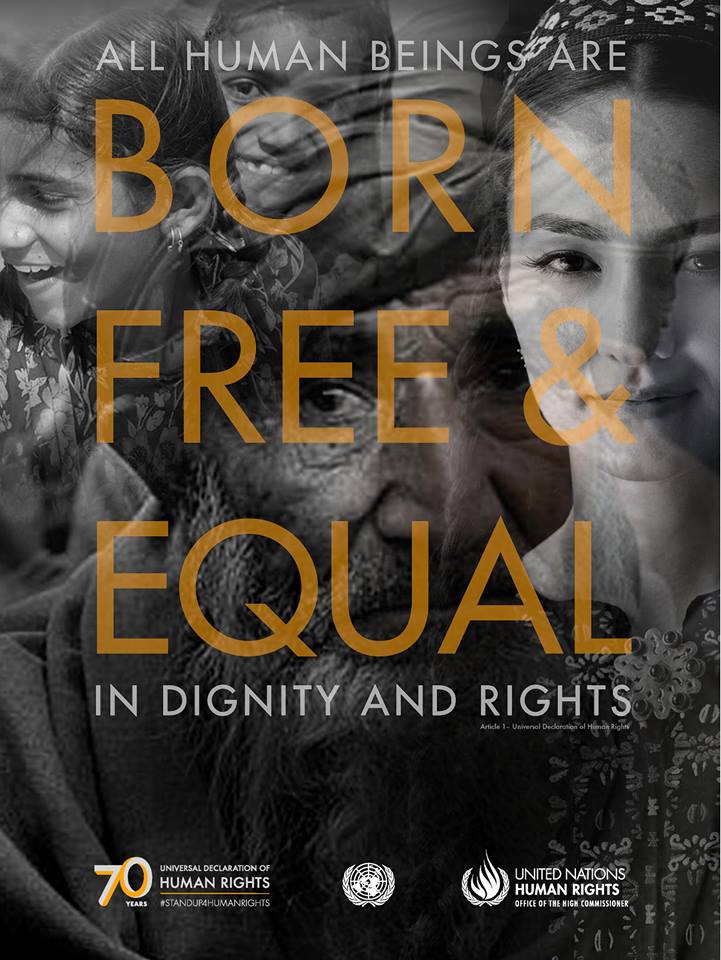
Today we are celebrating 70 years since the creation of the Universal Declaration of Human Rights.  

AWAVA recognises that violence against women and girls is one of the most serious and widespread violations of fundamental human rights. It manifests itself through violations of the rights to: life, equality and non-discrimination, rights not to be subjected to torture and treated in an inhuman and degrading way, rights to liberty and security, the highest standard attainable of physical and mental health, to respect, to physical, sexual and psychological integrity, and to just and favourable conditions of work. 


We work to combat all forms of violence against women to ensure that all women and children are able to live free from all forms of violence and abuse. 


In our work to end violence against women, we have strong links with international bodies and mechanisms to advance gender equality. This year the National Women’s Alliances have produced a fact sheet mapping international engagement and outlining each Alliance’s domestic advocacy priorities against international frameworks and commitments on gender equality and women’s rights. 


The AWAVA fact sheet describes our engagement with the Convention on Elimination of all forms of Discrimination against Women (CEDAW), Sustainable Development Goals, Commission for the Status of Women as well as other international mechanisms.


You can download it here.  

Go to Top